Skip to content

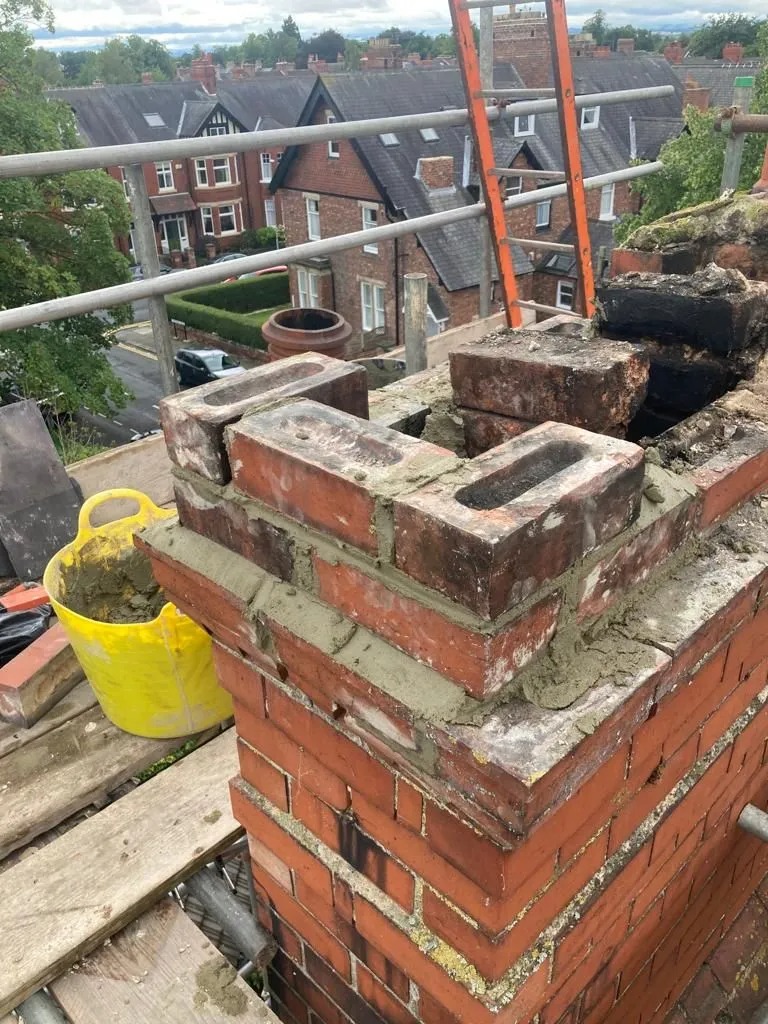
Chimneys are one of the most exposed parts of any roof. They stand above the roofline, take the full force of the wind and rain, and create a junction that must be sealed properly to keep water out. That seal is called the flashing – and when it fails, leaks soon follow.
In Hull and across the East Riding, chimney flashing problems are one of the most frequent causes of damp patches on ceilings and chimney breasts. Many of the older terraced and semi-detached homes in the area still have their original chimney stacks, and decades of coastal weather take their toll. In this guide, our chimney repair team explains what flashing is, how to spot the warning signs, what causes it to fail and how a proper repair is carried out.
What Is Chimney Flashing?
Flashing is the weatherproof material that seals the gap between the chimney stack and the roof covering. On most UK homes it is made from code 4 or code 5 lead, which is durable, malleable and can be shaped (“dressed”) to follow the contours of the tiles. A properly flashed chimney usually has four main parts:
- Front apron – a single piece across the downhill face of the chimney, dressed over the tiles below
- Step flashing (soakers) – stepped pieces running up each side of the stack, interleaved with the tiles or slates
- Cover flashing – lead dressed over the step flashing and tucked into the brick mortar joints
- Back gutter – a small lead gutter on the uphill side that channels water around the chimney
When all these parts are correctly sized, fitted and pointed in, rainwater is guided safely around the chimney and onto the roof below. If any one of them fails, water can track straight into the roof space.
Signs Your Chimney Flashing Is Failing
Flashing faults are often hidden from the ground, but these warning signs suggest it is time for a professional inspection:
Inside the home
- Damp patches or brown staining on the ceiling or walls around the chimney breast
- Peeling wallpaper, bubbling paint or blown plaster on the chimney breast
- A musty smell in upstairs rooms next to the chimney
- Water marks, wet timber or damp insulation in the loft beside the stack
- Drips or water appearing after heavy, wind-driven rain
Outside on the roof
- Lead that has lifted, split, cracked or slipped out of the brick joints
- Cracked or missing mortar where the flashing is tucked in
- Cement fillets (mortar used instead of lead) that are cracked or falling away
- Moss, leaves or debris collecting in the back gutter
- Tiles or slates around the chimney that have slipped or cracked
- Previous “quick fixes” such as mastic, silicone or flashing tape
Damp around a chimney is not always caused by the flashing – it can also come from porous brickwork, a missing chimney cap or condensation in an unused flue. Our guide to the most common causes of roof leaks in Hull homes explains how to tell the difference.
Damp Around Your Chimney?
We will inspect the stack, flashing, pointing and pots, find the real cause of the leak and give you a clear, fixed quote for the repair.
Get a Free Quote →Call Hull 01482 765054Call Scunthorpe 01724 450102What Causes Chimney Flashing to Fail?
Age and thermal movement
Lead is long-lasting, but it does not last forever. Every day it expands in the warmth and contracts in the cold. Over many years this movement causes fatigue, and pieces that were fitted too long or fixed too tightly can split.
Deteriorated pointing
Cover flashing is held in place by being tucked into the mortar joints of the chimney. When that mortar erodes – which happens faster in Hull’s salty, damp air – the lead loosens and water can run down behind it.
Strong coastal winds
Storms coming off the North Sea and up the Humber can lift poorly secured flashing. Once it has lifted, rain is driven straight underneath and into the roof.
Poor previous repairs
Mastic, sealant, flashing tape and cement fillets are often used as quick, cheap fixes. They may stop a leak for a season, but they crack, shrink and lose adhesion, and rarely provide a lasting solution.
Movement in the chimney stack
Older chimneys can lean or move slightly over time because of sulphate attack in the mortar or weathering of the brickwork. Even small movement can open up gaps at the flashing.
How Chimney Flashing Is Repaired Properly
A lasting repair depends on what the inspection reveals. A typical professional chimney flashing repair involves:
- Safe access – scaffolding or a roof ladder and edge protection, depending on the height and position of the stack
- Stripping out – removing old, split or badly fitted lead and any cement fillets or sealant
- Repointing – raking out the brick joints and repointing them so the new flashing has a solid fixing
- New lead work – fitting new lead soakers, cover flashing, front apron and back gutter, cut and dressed to suit the chimney
- Tile and slate repairs – replacing any tiles or slates damaged around the stack
- Final checks – inspecting the chimney pots, the flaunching (the mortar cap on top of the stack) and the brickwork while access is in place
Lead flashings should be fixed with lead wedges or clips and sealed into the joints with a suitable mortar or lead sealant – never relying on mastic alone.
Other Chimney Problems to Check at the Same Time
Because access to a chimney is often the biggest part of the cost, it makes sense to look at the whole stack while the scaffolding is up:
- Cracked flaunching – the sloping mortar cap around the pots can crack and let water into the stack
- Loose or damaged chimney pots – a safety risk in high winds
- Eroded brickwork and pointing – lets water soak into the stack
- Unused flues – can be capped with a ventilated cap to stop rain entering while allowing air to circulate
- Leaning stacks – may need partial or full rebuilding
If a chimney is no longer used and is causing ongoing problems, removing the stack below the roofline and re-tiling over it is another option. This is often combined with a wider re-roof – see our new roof installation service.
Can You Fix Chimney Flashing Yourself?
We always advise against DIY chimney work. Working at height on a pitched roof is dangerous, and lead work is a skilled trade. A badly dressed piece of lead can direct water into the house rather than away from it, and a temporary sealant fix can hide a problem while the damage gets worse. A professional repair is safer and usually saves money in the long run.
How Much Does Chimney Flashing Repair Cost?
The cost depends on the size and height of the chimney, how much lead needs replacing, the condition of the pointing and the access required. Simple flashing repairs on a single-storey roof cost far less than a full re-lead on a tall stack that needs scaffolding. We provide free, no-obligation quotes so you know exactly what is needed before any work starts. If several problems are appearing at once, read our guide on whether your roof needs repair or replacement.
Chimney Flashing FAQs
How long does lead chimney flashing last?
Well-installed lead flashing can last for many decades. In exposed coastal areas the pointing that holds it in place often needs attention sooner, so regular inspections are worthwhile. Our guide on how long a roof lasts in the UK covers lifespans for other roofing components too.
Is a cement fillet as good as lead flashing?
Cement fillets were common on older homes, but they crack as the roof and chimney move at different rates. Lead flashing is the long-term solution and is what we recommend on almost every chimney.
Should I get my chimney checked before winter?
Yes. Autumn is the ideal time to have your chimney and flashing inspected, before winter storms arrive. See our winter roof preparation checklist for other checks worth doing.
Will my home insurance cover a leaking chimney?
Many policies cover sudden storm damage but exclude gradual wear and tear. Take photos of any damage and check your policy wording before making a claim.
Related Roofing Guides
Book a Chimney Inspection in Hull & East Riding
From lead flashing and repointing to new pots, caps and full chimney rebuilds, our experienced roofers will fix the problem properly the first time.
Request Your Free Quote →📞 01482 765054Covering Hull, Beverley, Goole, Scunthorpe, Selby and the wider East Riding.