Skip to content
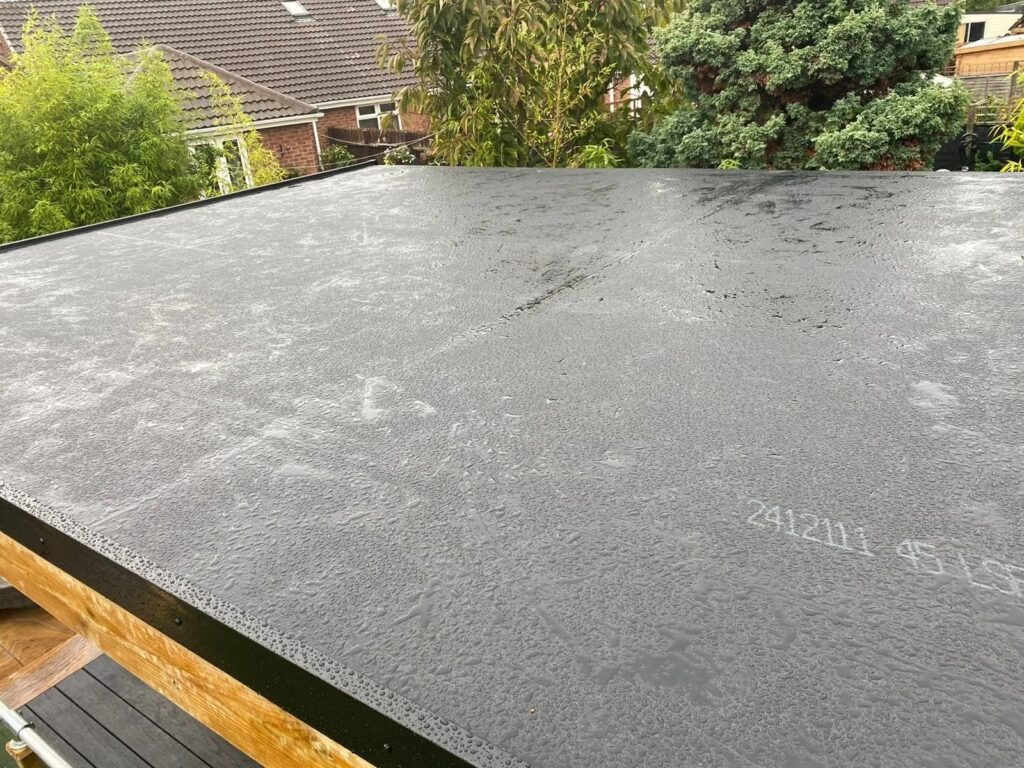
Flat roofs are everywhere in Hull and the East Riding – on kitchen extensions, garages, dormers, bay windows, porches and commercial units. When one starts to leak, pond or crack, most homeowners face the same question: which flat roofing system should replace it?
The three most common options in the UK are GRP (fibreglass), EPDM (rubber) and torch-on felt. Each has clear strengths, and the right choice depends on the size and shape of the roof, how it is used, how long you plan to stay in the property and your budget. In this in-depth guide, our flat roofing specialists in Hull explain how each system works, how long it lasts, how it compares on cost and where it performs best.
Why Flat Roofs Fail in Hull and East Yorkshire
Before comparing materials, it helps to understand what flat roofs are up against locally. Hull sits on the Humber Estuary, close to the North Sea, so roofs here face frequent wind-driven rain, damp salty air and regular freeze–thaw cycles through winter. Flat roofs are especially exposed because water drains away more slowly than on a pitched roof.
The most common flat roof problems we see on properties across Hull, Beverley and Goole include:
- Ponding water – where the deck has sagged or was laid without enough fall, water sits on the roof for days and slowly finds any weakness
- Cracked or blistered felt – caused by years of UV exposure followed by frost
- Failed upstands and flashings – where the flat roof meets a wall, door threshold or window
- Blocked outlets and gutters – leaves and moss stop water draining, so it backs up onto the roof
- Rotten timber decking – often hidden under the waterproof layer until the roof feels soft underfoot
- Condensation – poorly insulated or unventilated flat roofs can rot from the inside
A new covering will only perform as well as the deck and details beneath it, so any good flat roof replacement starts with checking the boards, the falls and the drainage. If you are not yet sure what is causing your problem, read our guide on the most common causes of roof leaks in Hull homes.
GRP Fibreglass Flat Roofs
GRP stands for glass reinforced plastic. It is a resin and glass-fibre matting system laid in liquid form over a timber deck (usually OSB3 boards). Once it cures, it forms one seamless, rigid, fully bonded waterproof layer. Pre-formed GRP trims are fitted around the edges for a neat finish, and a coloured topcoat protects the laminate from UV light.
Advantages of GRP
- Completely seamless – there are no joints or laps for water to find
- Very hard-wearing – suitable for light foot traffic, so it is popular for balconies and roof terraces
- Long lifespan – typically 25 years or more when installed correctly
- Neat appearance – clean lines and a choice of topcoat colours
- Easy to repair – damaged areas can be patched with fresh resin
- Handles complex details – works well around rooflights, upstands and outlets
Things to consider with GRP
GRP must be laid in dry conditions within a suitable temperature range, which matters in a damp climate like Hull’s – a good installer plans around the weather. It also needs a stable, well-prepared deck because significant movement in the structure can cause cracking. GRP usually costs more than felt but is often comparable to EPDM.
Best suited to
House extensions, balconies, dormers, porches and any flat roof where appearance and durability are a priority.
Not Sure Which Flat Roof System Is Right for You?
Our team will inspect your flat roof, check the deck and drainage, and give honest advice on the best system for your property – with a clear, no-obligation quote.
Get a Free Quote →Call Hull 01482 765054Call Scunthorpe 01724 450102EPDM Rubber Flat Roofs
EPDM (ethylene propylene diene monomer) is a synthetic rubber membrane. On most domestic roofs it is installed as one single sheet cut to size and bonded to the deck with adhesive, so there are few or no joints. Edges are finished with trims, and upstands are dressed up walls and sealed.
Advantages of EPDM
- Highly flexible – stretches and recovers, so it copes well with temperature changes and minor building movement
- Excellent weather resistance – strong resistance to UV light, ozone and weathering
- Long lifespan – many manufacturers quote 20 to 50 years
- Cold-applied – no naked flames are needed, which makes it a safer choice near timber
- Fast installation – a simple garage roof can often be completed in a day
- Lightweight – adds very little load to the structure
Things to consider with EPDM
EPDM is less suited to roofs that get regular foot traffic, and complicated roofs with many penetrations, corners and rooflights need careful detailing by an experienced installer. Its plain black finish is practical rather than decorative, though on most roofs it cannot be seen from the ground.
Best suited to
Garages, outbuildings, dormers and simple extension roofs where longevity and low maintenance matter most.
Torch-On Felt Flat Roofs
Modern torch-on felt is far better than the old single-layer “shed felt” many people remember. Today’s systems are multi-layer, polymer-modified bitumen membranes – usually a vapour control layer, an underlay and a mineral-finished cap sheet – heat-bonded to the deck with a gas torch.
Advantages of torch-on felt
- Budget-friendly – usually the lowest upfront cost of the three systems
- Multi-layer protection – several layers give built-in redundancy
- Mineral cap sheet – adds UV protection and improved fire resistance
- Proven system – widely used on both homes and commercial buildings
Things to consider with felt
Torch-on felt typically lasts around 15 to 25 years – less than GRP or EPDM. Because it is applied with a flame, it needs extra care near timber and is not always the preferred choice for small or awkward areas. Felt can become brittle with age, so regular inspection is important.
Best suited to
Larger, straightforward roofs and projects where keeping the upfront cost down is the main priority.
GRP vs EPDM vs Felt: Side-by-Side Comparison
- Lifespan: GRP 25+ years · EPDM 20–50 years · Felt 15–25 years
- Seams: GRP seamless · EPDM usually a single sheet · Felt overlapping layers
- Foot traffic: GRP good · EPDM limited · Felt moderate
- Installation: GRP cold-applied resin (weather dependent) · EPDM cold-applied adhesive · Felt hot works (torch)
- Appearance: GRP smooth with colour options · EPDM plain black · Felt mineral finish
- Relative cost: Felt lowest · GRP and EPDM mid-range
What Else Affects the Performance of a Flat Roof?
The deck
If the existing boards are damp, rotten or flexing, they must be replaced. Laying a new covering over a failing deck is one of the most common reasons new flat roofs fail early.
Falls and drainage
A flat roof is never perfectly flat – it should have a gentle fall so water runs to the gutter or outlet. Where ponding has been a problem, tapered firring strips can be added to improve the falls. Gutters and outlets must be sized correctly and kept clear – our article on why regular gutter maintenance is essential explains why.
Insulation and condensation
Replacing a flat roof is a good opportunity to improve insulation. A properly designed “warm roof” build-up places insulation above the deck, keeping the timber warm and reducing the risk of condensation. Where a significant part of a roof is renewed, Building Regulations insulation requirements may apply.
Edge details and upstands
Most flat roof leaks start at the edges – where the roof meets a wall, a door threshold, a rooflight or the gutter. Good detailing here separates a long-lasting roof from one that fails in a few years. Where the roof meets a wall, the joint needs proper lead or trim flashing, much like a chimney flashing detail.
Which Flat Roof Is Right for Your Property?
As a general guide:
- Choose GRP for extensions, balconies and roofs you want to look neat and last a long time
- Choose EPDM for garages, dormers and simple roofs where flexibility and longevity matter
- Choose torch-on felt when budget is the main priority and the roof is straightforward
The honest answer is that installation quality matters more than the material itself. A poorly laid GRP roof will fail sooner than a well-installed felt one. That is why we always inspect the deck, check the falls and look at the drainage before recommending a system. You can see examples of our work on our recent roofing projects page.
Flat Roof FAQs
How long does a flat roof last?
It depends on the material and the installation. Felt typically lasts 15–25 years, GRP 25+ years and EPDM 20–50 years. For a wider look at roof lifespans, see our guide: How long does a roof last in the UK?
Can a flat roof be repaired instead of replaced?
Yes – if the problem is a localised split, a failed upstand or a blocked outlet, a targeted repair is often all that is needed. If the deck is rotten or the covering has failed across a large area, replacement is usually more cost-effective. We offer both roof repairs in Hull and full flat roof replacement.
Do I need planning permission to replace a flat roof?
Replacing a flat roof covering like-for-like does not usually need planning permission, but rules can differ for listed buildings, conservation areas and where the height or structure changes. We are happy to advise on your project.
When is the best time to replace a flat roof?
Late spring to early autumn offers the most reliable weather, but flat roofs can be installed year-round with careful planning. If your roof is already leaking, do not wait – our winter roof preparation guide has tips on protecting your home in the meantime.
Related Roofing Guides
Get Expert Flat Roofing Advice in Hull
Whether your flat roof is leaking, ponding or simply showing its age, our experienced team will inspect it and explain your options clearly – with no pressure and no hidden costs.
Request Your Free Quote →📞 01482 765054Covering Hull, Beverley, Goole, Scunthorpe, Selby and the wider East Riding.